How to trade meme coins like a top-ranked Solana scalper without blowing your account
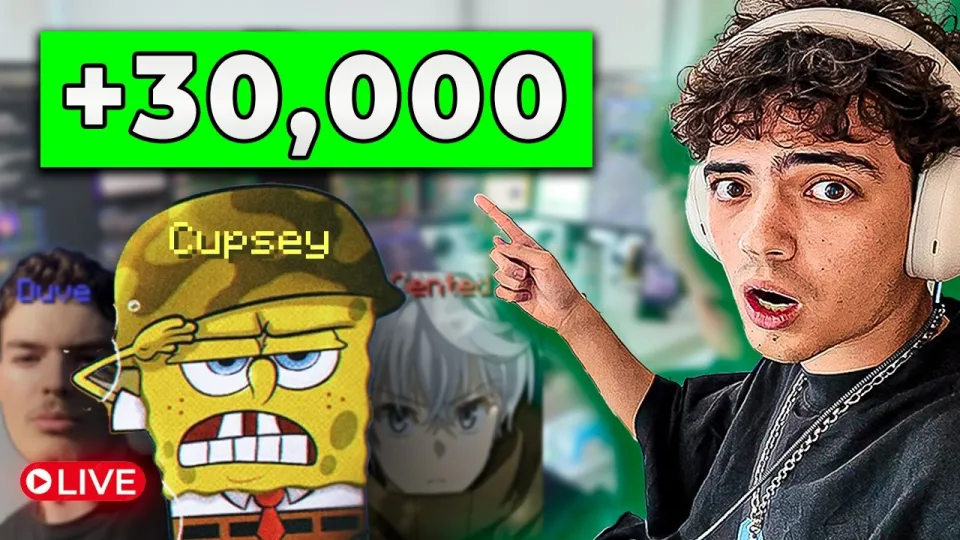
Video: I Traded With The World’s #1 Memecoin Trader
You can order the same kind of articles for your own video to boost it on YouTube and Google. Just message the Telegram bot @sat_sit_bot. Articles with your video embedded are written and posted by the bot itself — on popular topical sites (no ads). Free trial — 50 articles.
· based on the channel Ethan Prosper
Key takeaways
- A single session on Ethan Prosper's channel with trader Cupsey closed several trades for a combined result above 200 SOL on the first two positions alone.
- The format is short-horizon scalping on Solana launchpads such as pump.fun, executed through trading terminals rather than the native DEX interface.
- Reported highlights include roughly +$15K on a Grok-themed token and about +80 SOL on a Mosaic AI coin.
- Wallets and handles are public in the video description, so the trades can be verified on-chain instead of taken on trust.
- The style requires 10+ hour screen days, fast execution and tolerance for total loss on any single position.
Meme coin trading is short-horizon speculation on tokens with no cash flow, no product and no valuation anchor, where profit comes from being earlier and faster than the next buyer rather than from holding. Done the way the top-ranked Solana scalpers do it, it means screening new pairs on launchpads like pump.fun, entering small, cutting losers in seconds and taking partial profits into momentum. The reference point here is the session Ethan Prosper recorded with trader Cupsey, whose wallet and trades are public and can be checked on-chain; the terminal they route orders through is available via registration on Padre.
What the meme coin session actually shows
The video is a live record of a working day, not a tutorial, and that is exactly what makes it useful: you see the pace, the sizing and the number of trades that go nowhere. Across the run the pair open with Lobo and a token called 1%, which together are reported at roughly +200 SOL, then move through Cheese Coin and an AI-themed launch, a Grok-branded token for around +$15K, a dev coin branded as Magic Internet Money, and a Mosaic AI coin for about +80 SOL. The numbers are large because the bankroll and the risk tolerance are large; the mechanics are the same at any size.
What separates this from gambling is process. Every position has a thesis formed in under a minute — who is buying, how thin the book is, whether the dev is a serial launcher — and every position has an exit plan before entry. The wallet addresses published with the video (Cupsey's is 2fg5QD1eD7rzNNCsvnhmXFm5hqNgwTTG8p7kQ6f3rx6f) let anyone audit whether the reported results match the on-chain record, which is the first thing you should do before copying anyone's style.
How to trade meme coins step by step
Treat meme coin trading as a checklist you run in under two minutes per candidate, because the window on a new pair is measured in minutes. Skipping a step is how accounts die.
- Set the bankroll and the unit size. Decide the total amount you are willing to lose entirely, then risk 1–3% of it per trade. A scalper doing dozens of entries a day needs small units precisely because most entries fail.
- Screen the pair before you look at the chart. Check liquidity, holder count and distribution, age of the pool, and whether the top wallets are fresh addresses funded from the same source — that pattern usually means one operator running many wallets.
- Check the dev and the socials. A dev who has launched and abandoned tokens before is a sell signal. So is a Telegram or X account created the same day with bought followers. Real traction looks like organic replies, not a wall of identical emojis.
- Enter with a market order through a terminal, not the launchpad UI. Aggregator terminals route across pools and let you set slippage and priority fees explicitly; on Solana, a failed transaction still costs fees, so tune priority rather than maxing slippage.
- Define the exit before the entry fills. Typical scalper structure: sell a third to a half into the first impulse to get the initial risk off the table, trail the rest, and hard-stop the position if it loses the entry level or if the dev wallet moves.
- Log the trade. Entry reason, exit reason, result. After a few hundred trades the log tells you which setup actually pays and which one you only remember as profitable.
Position sizing and the math behind 200 SOL days
A 200 SOL result on two trades is not a strategy you can replicate by copying the entries; it is the product of a large bankroll and a high hit rate on a small number of outsized winners. If you start with 5 SOL, the same percentage move produces a result that looks trivial next to the video — and the same percentage loss hurts exactly as much relative to your stack.
Work in percentages, never in token counts or dollar targets. A trader who risks 2% per position and wins 55% of the time with a 1.5-to-1 average payoff is profitable even though more than four out of ten trades lose. A trader who risks 20% per position needs a hit rate no human sustains. The reported +$15K on a single Grok-themed token is a reminder that in this niche the distribution of outcomes is extremely skewed: a handful of trades carry the month, and the rest are noise you must survive.
Risks the highlight reel does not show
Meme coin trading is the most difficult style in crypto and the one with the highest rate of account wipeouts, which is why the honest framing is that you do not have to trade this way to make money in crypto. The specific hazards are concrete.
- Multi-wallet coordination. Groups of connected wallets can accumulate quietly, pump a chart that looks organic, and distribute into retail buyers. The complaint that insiders "dunk on you" is not cynicism; it is the default structure of many launches.
- Rug mechanics. Liquidity can be pulled, mint authority can be retained, and freezes can be enabled. Verify the token's authorities are revoked before sizing up.
- Slippage and fees. Thin books mean your own order moves the price against you, and priority fees on Solana are a real cost per attempt, not per success.
- Time cost. The operators in these videos run 10+ hour screen sessions. If you cannot watch the tape, you are not trading this style; you are donating to people who can.
- Survivorship bias. For every recorded 350 SOL session there are thousands of accounts that went to zero and never posted a recap.
Common questions from traders watching these sessions
Viewers consistently ask the same things, and the answers are less glamorous than the PnL screenshots. On whether you need to trade new pairs all day: no — larger, more liquid coins and slower swing styles exist precisely because scalping requires full-time attention. On what "faucets" means in this context: it refers to the small, repeatable edges a trader farms for income — referral rewards, airdrops, launch incentives — which supplement trading rather than replace it. On whether copying a top trader's wallet works: it can, but you inherit their entry timing only if you are faster than the crowd watching the same address, and you inherit none of their context for exiting. On how much capital is needed to start: enough that losing the entire stack changes nothing in your life, because at the beginning the goal is repetitions and a written record, not income.
One more recurring theme deserves a direct answer: not everyone in these videos is multi-walleting against you, but the ecosystem rewards speed and information asymmetry, so assume the counterparty on the other side of your fill knows more than you do and size accordingly.
Useful links
- Trade on Padre terminal — the routing and execution terminal used in the session.
- https://ethanprosper.com — the creator's hub for tools and links.
- https://x.com/cupseyy — Cupsey's public profile, where trade commentary and calls appear.
- https://discord.gg/solmafia — free community around Solana meme coin trading.
- https://www.joinpastel.com/r/ref=ETHAN — paid research and community subscription.
Bottom line
Meme coin trading rewards preparation and speed, not conviction, and the session on Ethan Prosper's channel is best treated as a demonstration of process under pressure rather than a template to copy trade by trade. The transferable lessons are unglamorous: size small, verify the dev and the holders, take risk off early, keep a log, and accept that most entries fail. If you want to test execution mechanics with a terminal built for this flow, start with Padre registration and paper-trade the checklist before committing real capital. Ethan Prosper deserves credit for publishing wallets alongside the numbers, which is more transparency than most recap videos offer — use it to verify, not to chase.
Source: I Traded With The World’s #1 Memecoin Trader · Markdown version
Questions & answers
How much money do I need to start trading meme coins?
Enough that losing the whole amount would not affect your finances, because early trades are practice and most of them will lose. A common approach is to risk 1–3% of that bankroll per position, which keeps you alive through long losing streaks while you build a track record. The 200 SOL sessions in recap videos come from large bankrolls and high risk tolerance, not from a minimum deposit requirement.
Can I just copy the wallets of top meme coin traders?
Copy trading works mechanically, but you inherit only their entries, not their reasoning or their exit discipline. By the time a public wallet's buy is visible, faster bots and watchers are already positioned, and when the original trader takes profit you may be left holding. Use public wallet data to study patterns and verify claimed results, not as a substitute for your own exit plan.
Why do so many meme coin traders lose money if some make 200 SOL in a day?
Outcomes are extremely skewed: a few large winners carry a month, and the majority of positions are small losses or scratches. Traders who skip position sizing turn those ordinary losses into account-ending ones, and coordinated groups of connected wallets routinely distribute into retail buyers. The visible winners are survivors — accounts that went to zero do not post recaps.
Do I need to trade brand-new Solana pairs on pump.fun to profit?
No. Scalping fresh launches is the most demanding style in crypto, requiring 10+ hour screen sessions, fast terminals and tolerance for constant losses. Slower approaches — larger-cap coins, swing trading, or building positions in projects with real usage — exist precisely because full-time scalping is unsuitable for most people. Learn the mechanics on liquid assets first, then decide whether speed trading suits you.